
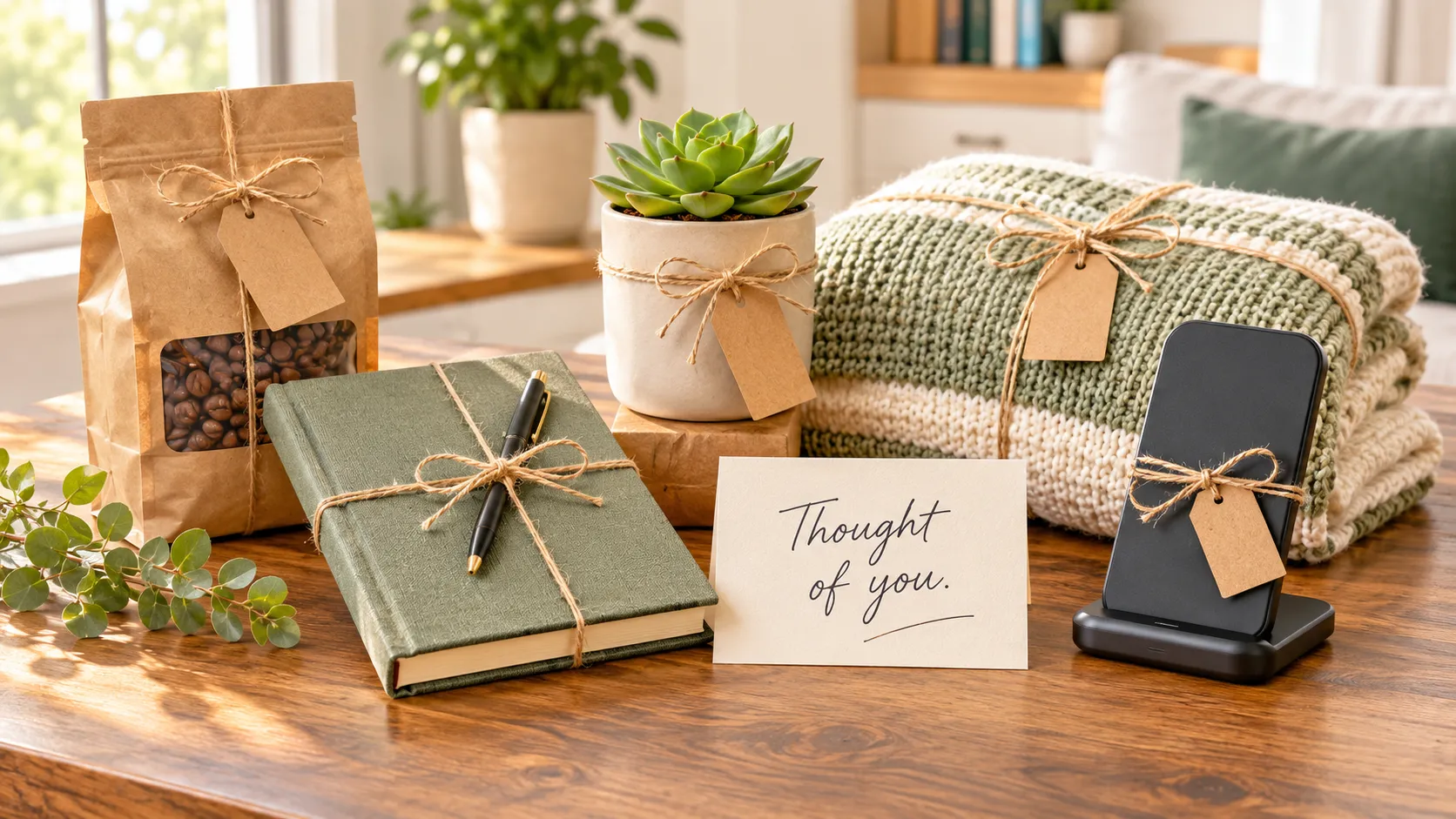
The best gifts for hard-to-shop-for people solve a small, repeated annoyance, create a memory, or disappear after they are enjoyed. They are almost never the biggest or most expensive item on the shelf. This guide gives you about 60 specific ideas sorted by personality, interest and budget, plus a simple framework for choosing when nothing obvious comes to mind. You will also find fixes for the problems that sink otherwise good gifts, such as wrong sizes, gift cards that feel cold and packages that arrive late. Our family has shared parenting finds and gift ideas on this blog since 2008, and one lesson keeps proving true: pay attention first, then shop.
Why Some People Are So Hard to Shop For
Almost every family has one: the relative who returns everything, the friend who buys whatever they want the moment they want it, the parent who insists they need nothing. Shopping for these people feels like guessing in the dark, and most of us respond by grabbing something safe and forgettable. That reaction is the real problem. Difficult recipients are rarely picky for the sake of it. They tend to have full homes, firm preferences or a quiet dislike of clutter, and a generic present runs straight into all three. Once you understand why a person is hard to shop for, the list of workable gifts shrinks fast. Start by sorting them into a type, because each type needs a different strategy.
What actually makes someone hard to shop for?
Someone is hard to shop for when they already own what they want, dislike clutter, have narrow tastes or keep their wishes private. Any one of those is enough. A minimalist treats every new object as a storage problem. A person who buys things for themselves has beaten you to every obvious idea. An emotionally reserved recipient may never mention what they would enjoy, and a hobbyist already owns the exact tools they prefer. Knowing which description fits is half the work.
What does “don’t get me anything” really mean?
It usually means “don’t give me something I have to store, return or feel obligated to use.” Most people who say it still appreciate being thought of. They want the gesture without the stuff. That is why shared meals, handwritten notes, consumables and small handmade items work so well, and why large physical presents tend to land badly. Do not skip the occasion. Shrink the object and grow the thought.
Which of the five recipient types is on your list?
Most hard-to-shop-for people fall into one of five groups. The table shows what usually fails and what usually works for each.
| Recipient type | What usually fails | What usually works |
|---|---|---|
| Minimalist | Decor, bulky gadgets, clothing | Consumables, experiences, digital gifts, practical upgrades |
| Buys everything themselves | Generic tech, basic accessories | Rare upgrades, limited editions, high-quality versions of everyday items |
| Says they want nothing | Surprise physical gifts | Shared time, food, handmade items, thoughtful notes |
| Has niche interests | Broad gift sets | Hobby-specific tools, classes, collectibles, expert-recommended gear |
| You barely know them | Personalized items | Flexible gift cards, quality consumables, experience vouchers |
If you are unsure which row fits, start with the minimalist row. Consumables and experiences are the lowest-risk choices for almost everyone.
Best Gifts for Hard-to-Shop-For People: The Use It, Use Up, Remember It Framework
When a recipient seems impossible, stop asking what you can buy and ask what their life is missing. A simple three-part filter makes that question easy to answer. Every strong gift for a difficult person does one of three things: it improves something they use daily, it gets used up so it never becomes clutter, or it becomes a memory they keep. This framework avoids the most common gifting mistake, which is buying another object for someone who does not want more objects. It also gives you a quick way to reject weak ideas. If a gift does none of the three, put it back and keep looking.
How do you find someone’s everyday friction?
Listen for complaints, delays and things worn down to the end of their life. A person who grumbles about a dying phone battery, tangled cords, a cluttered desk, poor sleep or a leaking travel mug is handing you a gift list. So is the person who keeps using the same cracked bag year after year, because people postpone replacing things they use constantly. Keep a running note on your phone all year and write each complaint down as you hear it. Before any birthday or holiday, read the note and you will usually find two or three real options waiting.
What counts as a “use it” gift?
A “use it” gift is a clearly better version of something they already rely on every day. Think of a 3-in-1 wireless charging station for someone with several devices, a compact power bank, an insulated travel tumbler, a comfortable seat cushion or a quality kitchen knife. The key is that the old version still works, which is exactly why they never upgraded. You are giving them something they would not justify buying for themselves.
What counts as a “use up” gift?
A “use up” gift is something consumable: specialty coffee, tea, chocolate, cheese, snacks, skincare, a candle or a curated basket. These are ideal for minimalists because nothing remains to store once the gift is gone. Match the item to a known taste. A random gourmet basket is a gamble, but a bag of the coffee roast they already drink is a sure win.
What counts as a “remember it” gift?
A “remember it” gift creates or preserves a memory. Examples include a class, a weekend trip, a framed photo, a photo book, a family recipe box or a handmade item. Personalization works best when it reflects something specific, such as an inside joke, a place or a family story, rather than simply printing a name on an object.
Best Gifts for Hard-to-Shop-For People by Gift Type
Once you know which category fits, the shopping gets faster. Experiences, consumables, practical upgrades and personalized keepsakes each solve a different problem, and each suits a different recipient. Experiences suit people who value time over possessions. Consumables suit people who dislike clutter. Practical gifts suit people who like function, and keepsakes suit people who value feeling. The lists below give concrete starting points in each category. Treat them as prompts rather than a shopping list, and adjust each idea to the person’s known tastes, because specificity is what turns a decent present into a good one.
What are the best experience gifts?
Experiences work because they cannot be duplicated and they create a shared story. The National Retail Federation’s October holiday survey found that 27% of holiday shoppers plan to give an experiential gift, up from 19% five years ago, according to its 2026 holiday shopping trends report. Good options include:
- A planned day together, such as brunch, a museum visit or a market stroll
- A cooking, pottery, photography or woodworking class
- A wine tasting, brewery tour or afternoon tea
- A massage, facial or spa day
- A weekend stay or a hot-air balloon ride
- A museum, botanical garden, zoo or aquarium membership
- Concert, theater or sports tickets
- A restaurant reservation at a place they have wanted to try
What are the best consumable gifts?
Consumables are among the lowest-risk gifts because they need no storage and can be matched exactly to taste. Online discussions among people who describe themselves as hard to shop for repeatedly favor wine, beer, cheese, chocolate, nuts and hot cocoa. Try these:
- Specialty coffee beans or a tea sampler
- A wine, beer or spirit in a style they already enjoy
- Olive oil, hot sauce, honey, jam or spices
- Gourmet chocolate or baked goods
- A monthly snack or popcorn subscription
- Skincare or bath products, if you know their skin type and scent preferences
- A candle or home fragrance, with unscented as the safe default
- A meal-kit trial or a food delivery credit
What are the best practical gifts?
Practical gifts succeed when they remove a known annoyance. A generic gadget becomes clutter, while a tool that fixes a real problem becomes indispensable. Consider:
- A 3-in-1 wireless charging stand
- A reusable digital notebook that scans handwritten notes to the cloud
- A compact power bank or braided charging cable set
- A cable organizer for a messy desk
- A luggage cup holder or travel organizer
- An ergonomic seat cushion or foot massager
- A compact tire inflator for the car
- A magnetic SSD or phone-storage accessory for someone whose phone is always full
What are the best personalized gifts?
Personalized gifts show attention, but they backfire when they feel generic or overly sentimental. Tie the gift to a real detail. Strong choices include:
- A photo book of shared memories
- A custom map of a meaningful place
- A recipe box filled with family recipes
- A commissioned pet portrait
- A custom illustration of their home, car or favorite spot
- An engraved cutting board, barware set or keychain
- A memory book built from family interviews and old photos
- A handmade item, such as baked goods, knitting or a restored object
Best Gifts for Hard-to-Shop-For People by Interest
Interest-based gifting is often easier than it looks, as long as you avoid the generic gift set. A person with a passion usually has strong opinions, so the safest move is to upgrade a ritual or fill a small gap rather than buy the main item. A coffee lover has a favorite machine. A traveler has a favorite bag. What they rarely have is the small accessory that makes either one better. Use the ideas below as a starting point, then check what they already own so you do not duplicate it. When in doubt, ask a close friend or family member, because someone nearby often knows the answer you cannot see.
What should you give a coffee or tea lover?
Upgrade the ritual instead of buying another mug. Good options include a precision kettle, a milk frother, specialty beans, a coffee subscription, a tea sampler or a well-made travel tumbler. A quality espresso machine suits the higher budgets.
What should you give a food lover?
Skip the generic basket. Choose a cooking class, a high-quality knife, a cast-iron skillet, a cookbook, a spice subscription, specialty ingredients or a restaurant experience.
What should you give a traveler?
Frequent travelers like compact, durable, problem-solving items. Try packing cubes, a passport wallet, a universal adapter, compression bags, a neck pillow, a portable charger, a travel journal or an airport-lounge pass.
What should you give a tech lover?
Avoid basic tech for someone who follows every launch. Choose an accessory that removes friction, such as magnetic storage, cable management, a premium charging stand or better headphones. A niche gadget they would not justify buying themselves also works.
What should you give a reader?
A book is risky unless you know their taste. Pair it with something safer, such as a bookstore gift card, a reading light, a book sleeve, a reading journal or a special edition of a favorite title.
What should you give a homebody?
Choose comfort that adds no visual clutter: a weighted blanket, a quality throw, slippers, a jigsaw puzzle, a paint-by-numbers kit or a mug warmer.
What should you give a gardener?
Consider a self-watering planter, quality hand tools, a seed collection, a smart bird feeder or a plant subscription.
What should you give a pet lover?
Pet gifts please both the person and the animal. Options include a custom pet portrait, a pet camera, an automatic feeder, a self-cleaning litter box or a durable toy.
What should you give a fitness-focused person?
Do not assume they want gym equipment. Recovery tools, a massage gun, quality socks, a fitness tracker, a workout-class package or a hydration accessory fit better.
Best Gifts for Hard-to-Shop-For People by Budget
A thoughtful gift does not depend on a big budget, but it helps to set one before you start browsing. Without a number, shoppers drift upward, adding extras until the total feels out of control. Pick your limit first, then look for the most personal option inside it. Price tells people very little about how much attention went into a present. A $20 item matched to a real habit usually beats a $90 item chosen at random. The ideas below show what each tier can buy, so you can see the range before you commit.
What are the best gifts under $25?
Small, targeted gifts work best here: specialty chocolate or coffee, a candle, warm socks or a beanie, a puzzle, a small plant, a paperback book, a phone stand or a handwritten card with a small treat. A digital gift card to a favorite cafe or bookstore also fits.
What are the best gifts from $25 to $75?
This tier suits a quality consumable basket, a board game, a local class, one month of a subscription, a personalized photo print, a skincare set or a compact tech accessory.
What are the best gifts from $75 to $150?
Look at a premium blanket, a wireless charging station, a quality kitchen tool, a museum membership, a spa experience, a well-reviewed pair of earbuds or a personalized memory book.
What are the best gifts over $150?
Consider a weekend stay, an espresso machine, a commissioned portrait, a premium tech accessory, a luxury grooming set or a curated travel experience.
Best Gifts for Specific Difficult Recipients
Some people need their own category because the usual rules do not apply. Coworkers call for professionalism, new partners call for caution and teenagers call for speed. Each of these recipients has a different risk. Give a coworker something too personal and it feels awkward. Give a new partner something too expensive and it feels heavy. Give a teenager something trendy and it can expire within weeks. The tips below match each group to its main risk and its safest category, so you can choose with confidence instead of guessing.
What do you give someone who says “don’t get me anything”?
Choose a shared meal, a handwritten letter, a consumable treat, a small handmade item, a donation in their name or an experience you can do together. Avoid a large physical gift. Do not ignore the occasion entirely, since most people who say this still want to feel remembered.
What do you give the person who has everything?
Look for a rare upgrade or something they would not justify buying for themselves. That might be an unusual hobby tool, a luxury version of a daily item, a niche collectible, a personalized keepsake or an experience.
What do you give a picky teenager?
Trend-driven gifts work but expire quickly. Safer options include an instant camera, an instant photo printer, a creative workbook, quality headphones, a skincare set, hobby supplies or an experience with friends. Gift cards also work, as long as they match a current interest.
What do you give in-laws or a new partner?
Choose neutral, high-quality and low-risk: a nice food item, flowers, a candle, a book, a board game or a local experience. Avoid clothing sizes, strong scents and jokes that depend on a closeness you do not have yet.
What do you give a coworker?
Keep it professional and broadly useful. A desk accessory, quality snacks, coffee, a plant, a notebook or a group experience all work. Skip personal-care items, clothing and anything that could feel too intimate.
What do you give an older parent or grandparent?
Gifts that preserve connection land best: a photo book, digitized family videos, a phone-storage fix, a comfortable blanket, a favorite subscription, a planned visit or a class that supports a hobby.
Common Gift-Giving Problems and How to Fix Them
Even a well-chosen gift can go wrong. The same frustrations come up again and again among shoppers: guessing the wrong size, giving a gift card that feels cold, watching a package arrive after the party, discovering the person already owns it and choosing a trendy item that is forgotten in a month. Each has a simple fix you can set up before you buy. Small habits, such as saving a receipt, checking shipping dates and asking one subtle question, prevent most of the disappointment. The answers below target the most common problems head-on.
What if you guess the wrong size or taste?
Include a gift receipt and tell the recipient it is in the box. Clothing carries a high return risk when size and style are unconfirmed, so choose adjustable items such as scarves, hats and robes, or pair a smaller item with a flexible gift card. Check the store’s return window before you buy. Making the exchange easy removes pressure and keeps the moment warm.
What if a gift card feels impersonal?
A gift card feels impersonal when it has no thought behind it, so pick a place they love and add a handwritten note. Pair it with a small item to make it feel chosen, such as a bag of coffee with a card to their favorite cafe. Safety matters too. The Federal Trade Commission advises buying gift cards from trusted sources, checking that packaging stickers are intact and keeping the receipt. It also warns that anyone who demands payment by gift card is a scammer, so never pay for anything that way.
What if the gift arrives late?
Order early and track the package. For delivery by December 25 inside the contiguous United States, the Postal Service lists Thursday, December 17 for Ground Advantage, Friday, December 18 for Priority Mail and Saturday, December 19 for Priority Mail Express on its 2026 holiday shipping deadlines page. Retailers set their own cutoffs, so check them. If a package slips, give a handwritten card and a small placeholder treat, then present the main gift when it arrives. Most people care more about the thought than the date.
What if they already own it?
Ask a mutual friend, or look at what they use, before you buy. If you are unsure, choose consumables and experiences, which cannot be duplicated. You can also attach the receipt and tell them they are welcome to swap it.
What if the trendy gift is forgotten in a month?
Trend-driven gifts expire fast, especially with teenagers. Pair a trend with something lasting, such as a collectible plus a gift card, or choose an item tied to a real hobby. Skip anything that depends on a fad staying popular.
What if personalization feels forced?
Personalization backfires when it only adds a name. Tie it to a specific memory, place or inside joke, and keep the design simple. If you do not know the person well enough for a personal detail, skip personalization and choose a high-quality consumable instead.
Gifts to Avoid (and What to Give Instead)
Some gifts fail not because they are bad but because they create work, pressure or clutter. Avoiding the common mistakes is often more effective than hunting for a perfect idea. A difficult recipient has usually received many of these over the years, which is part of why they became hard to shop for. If your idea matches one of the entries below, you can still salvage it by switching to the safer alternative in the right-hand column.
Which gifts fail most often?
These gifts cause the most trouble, along with a better substitute for each:
- Generic gift sets: They often contain items the person does not want. Give a curated consumable matched to a known taste.
- Clothing without a confirmed size and style: Return risk is high. Give a scarf, hat or flexible gift card.
- Strongly scented products: Fragrance is personal. Give an unscented or very mild option.
- Cheap versions of expensive hobbies: These can feel insulting to an enthusiast. Give a small premium accessory.
- Large decor: It is hard on minimalists. Give a consumable or experience.
- Novelty gadgets: They amuse for a day and then vanish. Give a practical upgrade.
- Duplicate hobby gear: Enthusiasts own the version they prefer. Give a class or consumable supply.
- Overly personal items for someone you barely know: These feel awkward. Give something neutral and high quality.
- Cash for someone who dislikes it: Some find cash impersonal. Give a gift card to a place they love.
Last-Minute Gifts That Still Feel Thoughtful
A last-minute gift does not have to look rushed. The goal is to make it feel chosen, not grabbed. Plenty of shoppers leave things late. In the same National Retail Federation survey, 64% said they are likely to wait until Thanksgiving weekend to do most of their holiday shopping, up from 51% five years ago. If you are in that group, digital and local options save you from shipping risk. Pick one that matches the person’s interests, add a specific note and you will deliver a gift that feels intentional even if you bought it the day before.
What are the best last-minute gifts?
These ten options need little or no shipping:
- A digital subscription delivered by email, such as coffee, streaming, learning or audiobooks
- An experience booking, such as a restaurant, class or museum visit
- A local gift card with a handwritten note
- Same-day flowers or a plant
- A curated playlist plus a small treat
- A food delivery credit
- A quality book from a local bookstore
- A donation to a cause they care about
- A framed photo printed the same day
- A small luxury consumable, such as good chocolate or specialty tea
How to Make Any Gift Feel More Personal
Presentation turns a simple gift into a memorable one, and it costs almost nothing. The same coffee beans feel generic in a plain bag and thoughtful when paired with a note about the morning you shared them. This step matters most for hard-to-shop-for recipients, because they are the ones most likely to notice effort. A few small habits, repeated each time, make every gift feel chosen. Start with the explanation, since that is the part people remember.
What simple touches make a gift feel personal?
Use these touches on any gift:
- Explain why you chose it. Saying “I remembered your cables always tangle” makes a practical item feel personal.
- Pair a small object with an experience. Coffee beans plus a planned coffee date works well.
- Write a real card. Include one specific memory or appreciation.
- Choose quality over quantity. One excellent item beats several mediocre ones.
- Make it easy to exchange. Include a receipt or choose a flexible retailer.
- Respect their preferences. If they dislike clutter, do not give clutter.
Best Gifts for Hard-to-Shop-For People: A 10-Minute Decision Checklist
When the options still feel endless, a short checklist keeps you moving. It starts with what you already know, narrows to what is practical and ends with a quick test of whether the gift feels personal. The process also protects your wallet, because it stops you from wandering the aisles hoping for inspiration. Use it as a repeatable routine for every name on your list. Over a few seasons, you will find that even the pickiest person becomes much easier to shop for.
How do you choose in ten minutes?
Follow these five steps in order:
- Name the recipient type. Minimalist, self-buyer, “don’t get me anything,” niche hobbyist or someone you barely know.
- Pick a framework slot. Decide whether it will be a use-it, use-up or remember-it gift.
- Set a budget. Choose your number before browsing.
- Shortlist two or three options. Check that none duplicates something they own.
- Run the one-sentence test. If you can explain the gift in one sentence, such as “You always say your commute is boring, so here are audiobook credits,” it is probably right.
Conclusion
The best gifts for hard-to-shop-for people come from noticing small details, not from spending more. Watch for complaints, repeated habits and passing wishes, then match the gift to the person’s type and your budget. Choose something they will use daily, use up or remember, and avoid gifts that create clutter or pressure. Plan for the common snags by saving receipts, ordering early and setting a limit before you shop. Start a notes list on your phone today, and next gift season will feel far easier.
FAQs
What is a good gift for someone who says they want nothing?
Choose a consumable, a shared experience or a small handmade item. These respect their wish for no clutter while still showing you thought of them. A handwritten note makes it feel complete.
Are gift cards a bad gift for someone who is hard to shop for?
No, but they work best when tied to a place the person already loves and paired with a personal note. Buy from trusted sources and keep the receipt. Never pay for anything with a gift card, since that is a common scam signal.
Is an experience better than a physical gift?
For minimalists and people who have everything, usually yes. Experiences cannot be duplicated and create a shared memory. For someone who values function, a practical upgrade can be just as welcome.
How much should I spend on a hard-to-shop-for person?
Spend what fits your budget and relationship. A well-matched $20 item often lands better than a random $90 one. Set your limit first and look for the most personal option inside it.