
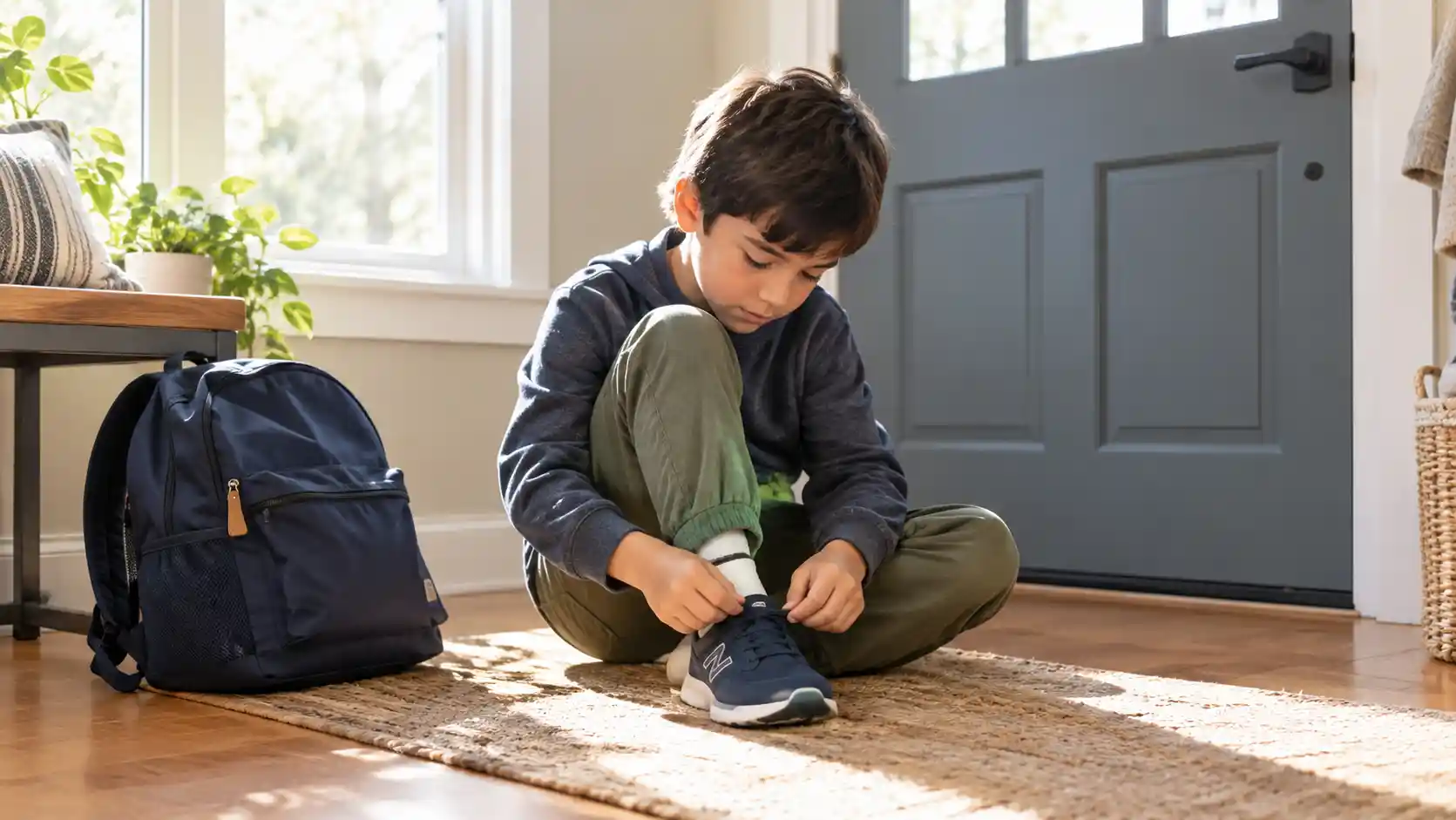
Mornings can make or break the rest of the day. When everyone is rushing to find shoes, sign a permission slip, and choke down breakfast at the same time, it’s easy for tempers to fray before anyone even leaves the house. A realistic morning routine won’t eliminate every hiccup, but it can turn chaos into something closer to a rhythm.
The key word is realistic. A lot of morning-routine advice online is built around picture-perfect timelines that fall apart the first time someone can’t find their left shoe. Here’s a more forgiving approach.
Start the Night Before
Most morning stress actually starts the night before. A few small habits, done consistently, prevent the majority of morning scrambles:
- Lay out clothes for the next day, including socks and shoes.
- Pack backpacks and lunches (or at least the non-perishable parts) before bed.
- Do a quick “landing zone” check — keys, backpacks, and permission slips all in one spot by the door.
- Set out breakfast dishes or a simple breakfast plan so there’s no morning decision-making.
None of this needs to be elaborate. The goal is to remove decisions from the morning, since decision fatigue is often what turns a normal morning into a stressful one.
Build in Buffer Time
Most morning routines fail because they’re timed for a best-case scenario. If getting dressed “should” take ten minutes, plan for fifteen. If breakfast “should” take ten, plan for fifteen. That extra cushion absorbs the inevitable delays — a missing shoe, a meltdown over the wrong colored cup, a sudden need to find a stuffed animal — without throwing off the whole morning.
A simple way to find your real buffer time: for one week, just observe how long each part of the morning actually takes, without trying to rush it. Use those numbers, not aspirational ones, to build the schedule.
Give Kids a Visual Routine
Young kids especially respond better to a routine they can see rather than one they’re told verbally, over and over, every single morning. A simple checklist — even a hand-drawn one taped to the bathroom mirror — can cut down on the amount of reminding parents have to do. Something like:
- Get dressed
- Brush teeth
- Eat breakfast
- Grab backpack
- Shoes on, by the door
Letting kids check off their own steps gives them a sense of ownership over the routine, rather than feeling like they’re constantly being rushed by an adult.
Protect the Wake-Up Window
How a child wakes up often sets the tone for everything that follows. A sudden, jarring wake-up — an alarm, a parent flipping on the lights, a rushed “we’re late, get up now!” — tends to produce a grumpier, slower kid than a gentler transition. Where possible, waking kids a few minutes earlier with a soft light, a favorite song, or simply sitting on the edge of the bed for a moment can smooth out the whole start of the day.
Keep Breakfast Simple
Breakfast doesn’t need to be elaborate to be nutritious. Rotating through a handful of simple, ready-to-go options — overnight oats, pre-made muffins, yogurt with fruit, or even a good cereal with protein added on the side — removes the “what should I make” decision every single morning. If a child helped choose the rotation, they’re also more likely to actually eat it without a fuss.
Expect (and Plan For) the Off Mornings
Even the best routine won’t work every single day. Some mornings someone will wake up sick, or in a mood, or the routine will simply fall apart for no clear reason. That’s normal. A good morning routine isn’t one that never breaks down — it’s one that’s easy to pick back up the next day without guilt or a full overhaul.
The Bottom Line
A realistic morning routine isn’t about achieving a flawless, Pinterest-perfect start to the day. It’s about reducing the number of decisions, arguments, and surprises that have to happen in a short window of time. Small, consistent habits — done the night before, with a little buffer built in — tend to do more for a calm morning than any single trick.
For more everyday parenting ideas, browse the rest of our Parenting articles, or check out our piece on positive discipline strategies that actually work at home.