
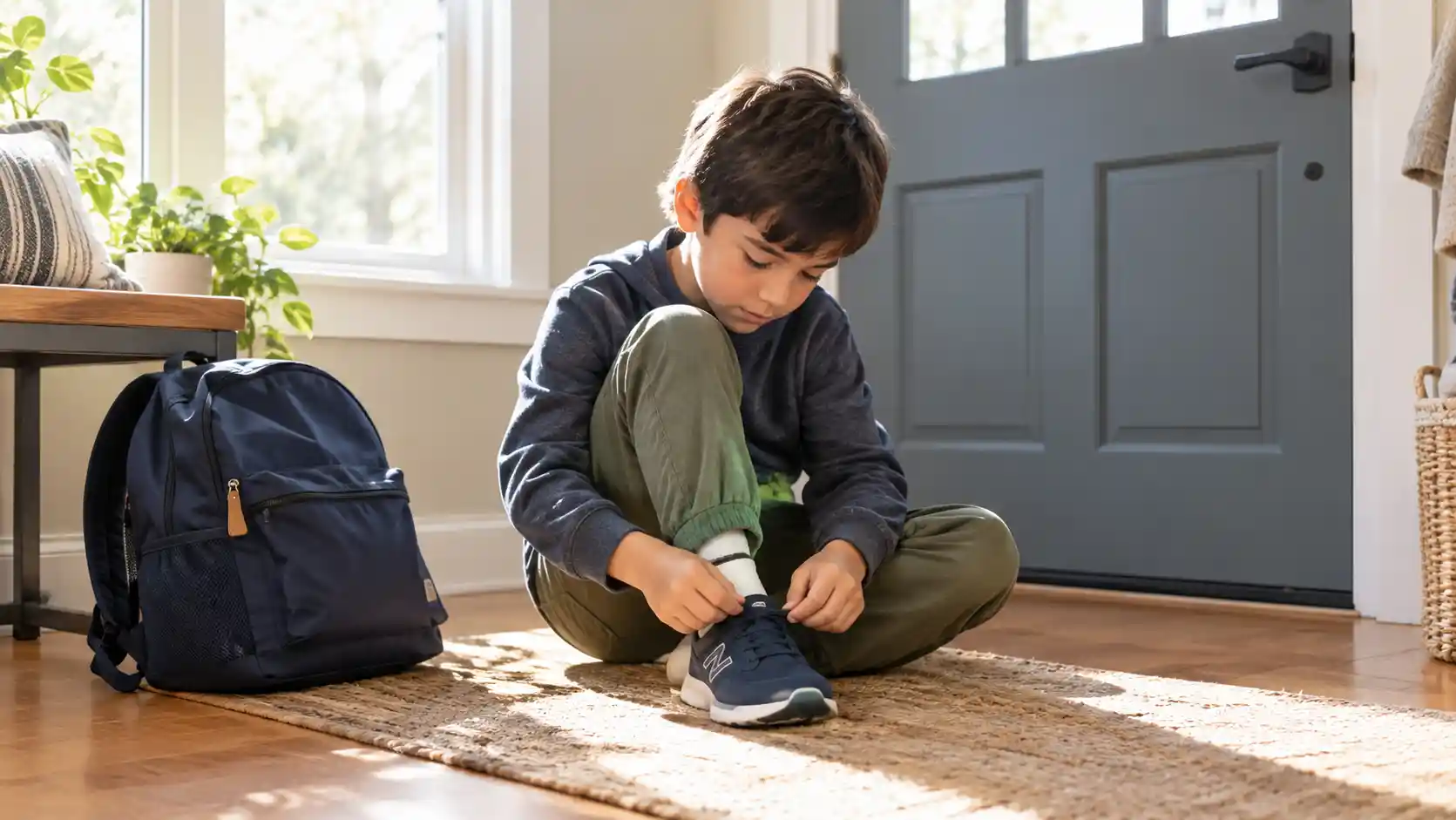
The chaotic school morning isn’t really a time-management problem it’s a decision-fatigue problem happening at the worst possible hour. A morning routine school age kids can genuinely follow on their own isn’t built around a stricter schedule. It’s built around removing as many decisions as possible before anyone’s brain is actually awake enough to make them well. This covers six specific, concrete fixes that address where mornings actually break down not generic “wake up earlier” advice. But the particular friction points that turn a routine on paper into chaos in practice.
Why Most Morning Routines Fail By 7:15 AM
A routine written on paper and a routine that survives an actual Tuesday morning are two different things. And the gap between them usually comes down to decision points built into the schedule rather than removed from it. Every choice a kid has to make in the morning what to wear, what to eat, where’s my backpack adds friction. And stacking five or six of those decisions between waking up and walking out the door is where most routines collapse.
The fix isn’t more structure in the moment; it’s shifting decisions to the night before. When everyone has more patience and more time to actually think. This single shift accounts for more of the improvement in a functioning morning routine than almost anything else on this list.
Fix 1: Clothes Get Chosen the Night Before, No Exceptions
This is the highest-impact, lowest-effort change available. And it solves a genuinely disproportionate amount of morning friction for how simple it is. Standing in front of a closet at 7 AM, half-awake, trying to decide what to wear is a real decision cost. And it’s one that’s completely avoidable with five minutes the previous evening.
Let kids pick their own outfit the night before within reasonable parameters weather-appropriate, clean, season-correct rather than a parent choosing for them. Ownership over the decision matters here. A kid who picked their own outfit the night before is far less likely to suddenly hate it at 7:10 AM than one who’s being told what to wear in real time.
Should I Let My Kid Pick a Weird Outfit Combination if It Gets Chosen the Night Before?
Generally yes, within reason the goal is reducing morning friction, not achieving fashion coordination, and a slightly mismatched. But weather-appropriate outfit chosen calmly the night before beats a battle over a “correct” outfit choice happening under time pressure the next morning.
Fix 2: Backpacks Get Packed and Placed by the Door
A missing homework folder or forgotten permission slip discovered at 7:25 AM turns a calm morning into a frantic one instantly. And it’s entirely preventable with a consistent evening habit. Pack the backpack after homework is done, check it against a simple checklist taped inside a closet door. If your kid needs the visual reminder, and place it by the exit door. Not in a bedroom where it has to be remembered and retrieved separately.
The “by the door” placement matters more than people expect. A backpack sitting in a bedroom requires an extra step of memory and effort at the exact moment. When executive function is at its lowest for the day. Removing that extra step removes a genuine failure point.
Fix 3: Build In a Wake-Time Buffer, Not Just an Alarm Time
Most morning schedules are built around when a kid needs to leave the house. Working backward with zero buffer for anything going wrong a slow breakfast, a missing shoe, a sibling conflict. Building in a genuine 10 to 15 minute buffer between “everything’s technically ready” and “we actually need to walk out the door” absorbs the small disruptions that happen almost every single morning without turning them into a crisis.
How Much Earlier Should I Actually Wake My Kid Up?
Roughly 10 to 15 minutes earlier than your current wake time is a reasonable starting adjustment for most families. Since this buffer absorbs typical small delays without requiring a dramatically earlier bedtime that disrupts sleep needs. Test this adjustment for a week before deciding whether more buffer time is genuinely needed.
Fix 4: Breakfast Options Get Limited to 3 Pre-Decided Choices
Open-ended “what do you want for breakfast” questions in the morning invite exactly the kind of decision paralysis and negotiation that wastes precious minutes. Offering three consistent, pre-approved options say, cereal, toast with a specific topping. Or a smoothie genuinely speeds up the decision without eliminating a kid’s sense of choice entirely.
This works especially well when the same three options repeat regularly rather than changing daily. Since familiarity itself reduces decision time. A kid who knows the breakfast rotation doesn’t need to actually think about it each morning. The choice becomes closer to habit than a genuine decision.
Fix 5: One Visual Checklist Replaces Verbal Reminders
Repeating the same verbal reminders every single morning brush your teeth, get your shoes. Where’s your backpack is exhausting for a parent and, counterintuitively, often less effective than a simple visual checklist a child can follow independently. A basic list taped at kid height, with simple icons for younger children who aren’t strong readers yet. Shifts responsibility from a parent’s memory to a system the child can check themselves.
At What Age Can Kids Realistically Follow a Morning Checklist Independently?
Most children can follow a simple picture-based checklist starting around age 5 to 6, with fully independent use of a written checklist becoming realistic by around age 8 or 9. Though this varies meaningfully by individual child and how consistently the checklist habit has been reinforced.
Fix 6: Screens Stay Off Until Everything Else Is Actually Done
This is the fix most families resist and the one that often matters most. A screen turned on before a morning routine school age kids are supposed to be following is complete tends to derail the entire sequence. Since a kid absorbed in a show or game genuinely stops tracking time and stops responding to reminders effectively.
Save any screen time even five minutes as the reward that happens only after teeth are brushed. The backpack is by the door, and shoes are on, rather than something available in the background the whole morning. This reordering alone resolves a significant share of “we’re late again” mornings in households. Where screens were previously available throughout the routine.
Conclusion
A functioning morning routine school age kids can actually stick to isn’t about stricter enforcement in the moment it’s about shifting decisions to the night before, building in real buffer time, and removing the small daily friction points that compound into genuine chaos by 7:30. Start with clothes and backpacks the night before, since those two changes alone resolve a disproportionate share of typical morning problems, then layer in the checklist and screen-timing adjustments once the basics are consistent. Small, specific changes compound faster here than a complete schedule overhaul ever does.
FAQs
What’s the single most effective change for a chaotic school morning?
Choosing clothes and packing backpacks the night before consistently resolves more morning friction than any other single change, since it removes two major decision points from the actual morning window entirely.
How early should kids wake up for a smooth school morning?
Build in roughly 10 to 15 minutes of buffer time beyond your current schedule to absorb typical small delays, then adjust further based on how your specific family’s mornings actually go after a week of testing.
Should screens be allowed during the morning routine?
Generally no until the routine’s core tasks are finished, since screen time tends to derail focus and time awareness, making it more effective as a reward for completing the routine than as background entertainment throughout.
At what age can kids follow a morning routine independently?
Most children can manage a simple picture-based checklist by age 5 to 6, with fuller independence on a written routine becoming realistic by around age 8 or 9, depending on the individual child and consistency of practice.
1 thought on “Morning Routine School Age Kids: 6 Fixes That Stop the Daily Rush”