
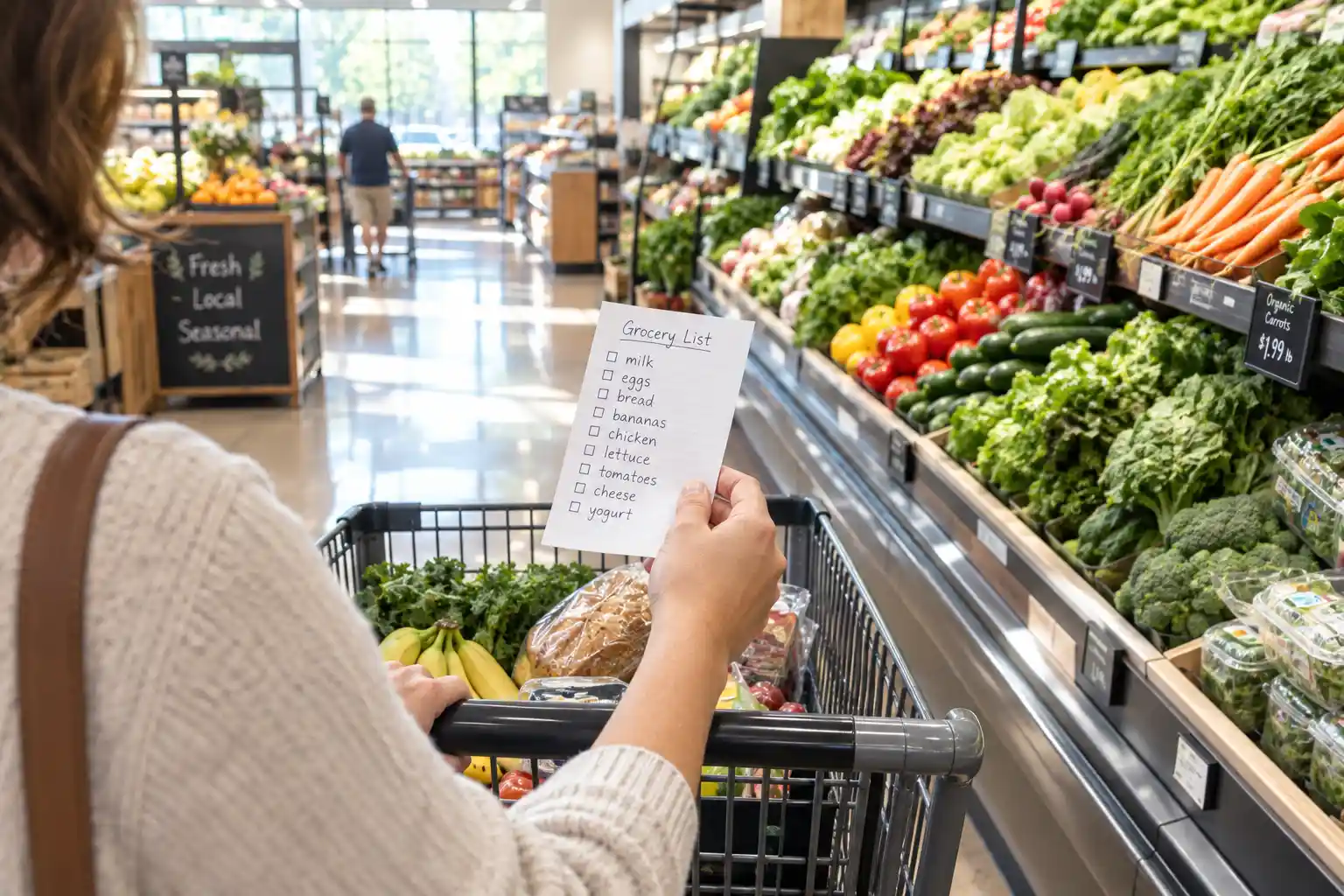
A $12 slip at the grocery store on Tuesday doesn’t feel like much. Repeat it weekly and you’ve lost about $600 by December. That’s the problem with food spending: it’s small, constant, and easy to ignore. The fix isn’t a coupon binder. Three habits do most of the work. Decide what you’re cooking before you go. Compare price per ounce, not price per box. Eat what you buy. These grocery shopping tips to save money fit a $60 week or a $200 one. I’ll walk through six habits, from planning to waste to where you shop. Try two first. A 10 to 15 percent cut is realistic, depending on where you’re starting.
Plan Before You Leave Home
Impulse buys are the most expensive items in any cart. You know the usual suspects: the chip display at the end of the aisle, the “2 for $6” sign, the bakery smell right by the door. None of it is an accident. Fifteen minutes of planning once a week blocks most of it, and honestly that’s the best return on time in this whole article.
Start with the fridge. Check the freezer too, because that’s where forgotten food goes to die. Then skim the store flyer. Chicken thighs on sale? That’s two dinners handled. Write the list last. Keep the plan loose, since all it needs to do is tell you what to buy and what to skip.
How do I plan meals that actually cut costs?
Plan five dinners, not seven. The other two nights are for leftovers, eggs on toast, or whatever’s in the freezer. Overlap your ingredients so nothing rots. One roast chicken on Sunday becomes tacos Tuesday and soup Thursday, and a single bunch of cilantro covers all three. Lentils, eggs, rice, and frozen vegetables cost the least per serving, so lean on them. Want a benchmark? The USDA publishes monthly Food Plan costs by household size. Put your receipts next to those numbers and see where you stand.
Does a shopping list really save money?
Yes, because without one you shop by mood. Write it in the order of the store layout and you’ll stop doubling back past the cookies. Eat before you go, too. It’s old advice that still works. Pickup helps since you build the cart at home, but watch the fee. A $5 charge on a $40 order cancels most of the benefit.
Grocery Shopping Tips to Save Money in the Aisle
Inside the store, brand and size decide most of your bill. Stores are betting you’ll grab the familiar box at eye level and never read the little tag under it. Look up. Look down. The cheaper stuff tends to sit on the top and bottom shelves, which I only noticed after years of ignoring it. [Your own aisle observation here.]
Focus on what you buy every week. A 40-cent gap feels silly. Over 52 weeks, though, it’s about $21 on one item, and most of us buy a dozen items like that.
Are store brands really cheaper?
Mostly, yes. A 20 to 30 percent gap is a fair rule of thumb, though it varies by store and product. Begin with the dull stuff: flour, rice, canned tomatoes, butter, frozen peas, pasta. Once tomatoes simmer into sauce, nobody can tell the brand. Keep the name brand where you’d actually notice, like coffee or peanut butter in some houses. [Your example: a swap that worked or one your family rejected.] Then compare receipts after a trip or two.
How do I compare unit prices?
Read the small number on the shelf tag and pick the lowest. A 32-ounce jar at $4.80 is 15 cents an ounce. The 64-ounce jar at $8.96 is 14 cents, so it wins. The 48-ounce jar at $7.68 comes out to 16 cents and loses to both. So no, bigger isn’t always cheaper, and the middle size can be the worst deal on the shelf. Most U.S. stores print unit prices on the tag. If yours doesn’t, your phone’s calculator takes ten seconds.
Cut Waste and Choose the Right Store
Cheap food in the trash isn’t cheap. Waste is the sneaky cost in most kitchens, and fixing it doesn’t require changing a single brand. Where you shop matters almost as much, because the same cart can come out noticeably higher or lower from one chain to the next.
For most families I’d suggest two stops. Buy the bulk of your list at a discount grocer, then swing by a regular supermarket for the few things it doesn’t stock. [Your example: the two stores you’d pair in your own town.]
How much food does the average household throw away?
The USDA estimates that 30 to 40 percent of the U.S. food supply goes uneaten, and a lot of that happens at home. The figure is on the USDA’s food loss and waste pages if you want to check it. Freeze bread, meat, and cooked rice before they turn. Move older items to the front of the fridge. And if you need three apples, buy three apples, not the bag.
Are warehouse clubs worth the membership?
For big households, yes. For small ones, rarely. A $60 annual fee needs only about $1.15 a week in savings to break even, which sounds easy until half of a giant pack spoils. [Your example: something you bought in bulk and couldn’t finish.] Aldi and Lidl sell basics cheaply with fewer brands, and I’d try them first. Join a club only if you have the freezer space.
Conclusion
Saving on food isn’t about tricks. It’s about habits you repeat until you stop noticing them. Plan around what you own, write the list, pick store brands, read unit prices, and waste less. These grocery shopping tips to save money get easier every week, and the savings stack up over a year. Pick two this week. Keep your receipts for a month. Add more once those stick. A small routine you follow beats a big overhaul that dies by Friday.
FAQs
How much should I spend on groceries per week?
It depends on your household size and local prices. The USDA’s monthly Food Plan reports give a solid benchmark, from thrifty to liberal.
What is the cheapest way to buy groceries?
Pair a discount grocer with store brands and a simple meal plan. Cooking only what you planned cuts waste and impulse buys.
Is it cheaper to buy groceries online or in store?
In store, usually, once you count service fees, delivery, and tips. Online works if you build the cart from a list and skip the add-ons.
Do coupons and apps still save money?
Yes, but only on items you already buy. A deal on something unplanned is just extra spending.
1 thought on “Grocery Shopping Tips to Save Money: 6 Habits That Trim Your Weekly Bill”