
Most homes don’t need their ducts cleaned on a schedule. That surprises people, because the coupons in your mailbox say otherwise. The EPA does not recommend routine duct cleaning, only cleaning when there’s a real reason. So before you search for air duct cleaning services near me, find out whether you have a reason. If you do, learn how to hire someone honest. This guide covers the signs that justify the job, five checks that separate good companies from pushy ones, what a visit involves, and how to think about price. Read it before you call anyone, because the wrong first call can cost you real money for work you didn’t need.
Do You Actually Need Your Ducts Cleaned?
Dust in your ducts is normal. Every home has some, and a thin layer on the metal doesn’t mean your air is dirty. The EPA says much of that dust sticks to the duct walls and never reaches the room. It also says duct cleaning hasn’t been shown to prevent health problems. That doesn’t make cleaning useless. It means you clean for a specific reason, not out of habit or because a flyer scared you. The EPA names a few clear reasons, and I’d treat those as your checklist. If none of them fit, put the money into better furnace filters.
When is duct cleaning worth paying for?
Duct cleaning is worth paying for when you can see mold, pests, or heavy debris. The EPA points to substantial visible mold inside metal ducts as one reason. Droppings from rodents or insects count too, as do ducts so clogged that dust blows out of the vents. If a company says it found mold, ask to see it. A photo can’t confirm mold for certain. Also, if insulated ducts got wet or moldy, the EPA says they can’t be cleaned well and need replacing.
When can you skip it?
You can skip it when you have no visible problem, no pests, and no recent flood or renovation mess. A home that looks and smells normal usually doesn’t need work. Prevention matters more. The EPA says keeping water and dirt out of the system is the best protection. Change filters on schedule, seal gaps, and cover vents during dusty projects. If someone at home has unexplained symptoms, talk to a doctor before you call a duct company.
How to Choose Air Duct Cleaning Services Near Me
Once you know you need the job, hiring is where people get burned. License rules differ by state, so you have to check yours. Picking the highest star count on a map isn’t enough, since reviews can’t tell you how clean the work was inside the ducts. Use five checks instead: certification, a written quote, the cleaning method, photos, and how the company reacts when you decline add-ons. Run through them on the phone. A good company answers plainly and doesn’t get defensive. A pushy one gets vague fast.
How do you check if a company is NADCA certified?
Ask for the company’s NADCA membership and the name of its certified technician, then confirm it on NADCA’s find a professional page. NADCA offers an Air Systems Cleaning Specialist certification, called ASCS, plus a ventilation inspector certification. A member company needs at least one ASCS on staff. Certification doesn’t guarantee perfect work, but it shows the company knows the industry’s cleaning standard.
What should a written quote include?
A written quote should list how many vents and returns are covered, which systems are included, the cleaning method, and a total with every add-on named. Look for a method where a strong vacuum pulls air through the system while brushes or compressed air knock debris loose. Ask whether the price covers the furnace blower and the vent covers. If the quote just says “whole house,” ask for details in writing.
What are the red flags?
The biggest red flags are a rock-bottom flat price, pressure to add sanitizer, and no proof. Coupons for a whole-house cleaning at a tiny price often grow once the technician arrives, so ask exactly what’s covered. The EPA urges caution with chemical sprays inside ducts, so ask what’s being applied and why. Request before-and-after photos from inside the ducts. A company that refuses has told you something.
What Happens During a Cleaning and What It Costs
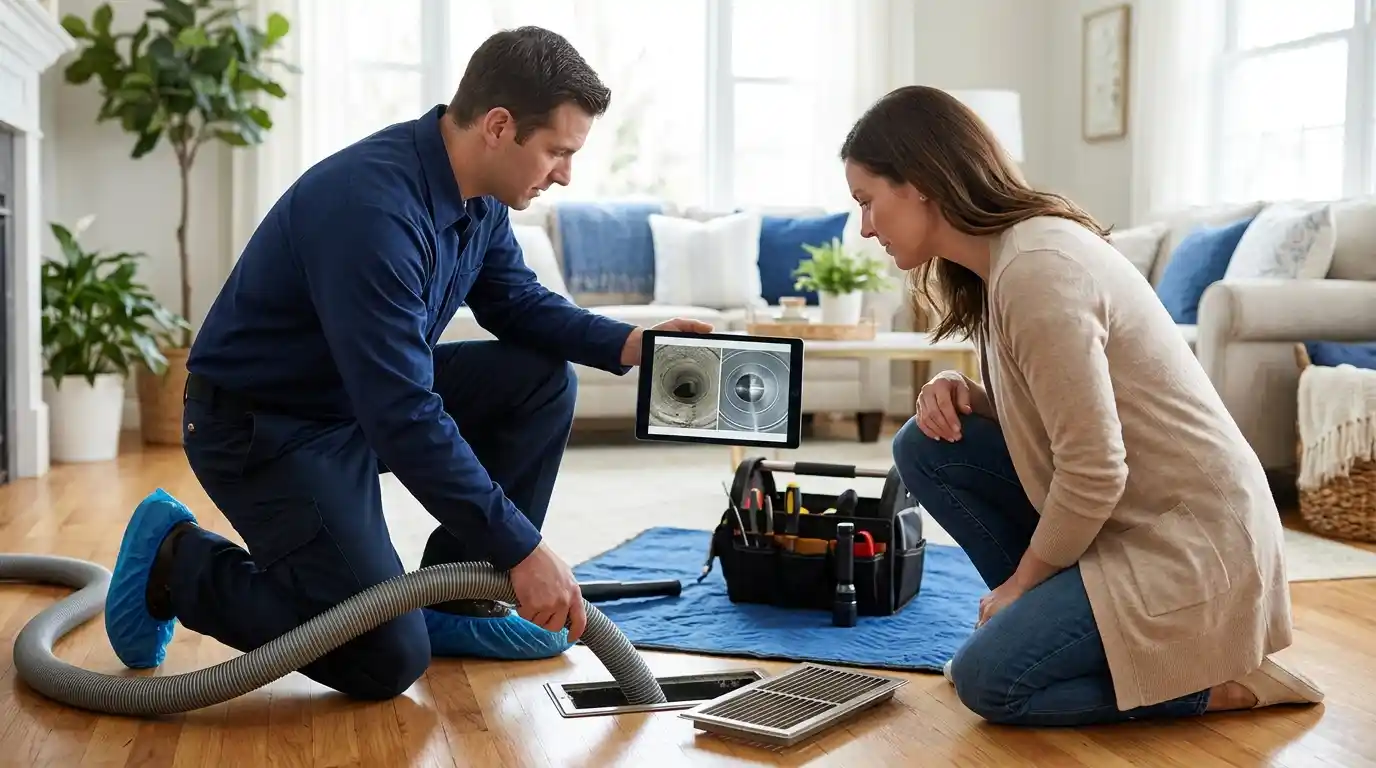
A proper cleaning isn’t a quick spray and wipe. The crew sets up a powerful vacuum, opens access points in the ductwork, and works through every supply and return line. They clean the registers and grilles, and the blower too if that’s in your quote. Larger homes and houses with several furnaces take longer. Good crews cover floors and clean up afterward. Price follows the same logic. More vents, more systems, and harder access mean a bigger bill. No honest flat number fits every house, so get quotes instead of trusting a headline price.
How long does duct cleaning take?
A typical single-system home takes a few hours as a rule of thumb, and bigger or multi-system homes take longer. Ask for a time window when you book. Be home at the start so you can watch the setup and ask questions.
How much does it cost?
Cost depends on vent count, number of systems, and access, so get three written quotes from certified companies. If one comes in far below the others, ask what’s missing from it. A fair price is one the company can explain line by line. Cheapest rarely wins, because a rushed crew can leave debris behind or damage the ducts.
Conclusion
Finding good air duct cleaning services near me doesn’t have to feel like a gamble. First, confirm you have a real reason: visible mold, pests, or heavy debris. Then run the five checks: certification, a written quote, the method, photos, and how the company handles add-ons. Compare three quotes, ask plenty of questions, and don’t let anyone rush you at the door. If nothing is wrong, skip the job and spend the money on filters. A clear reason and an honest company matter more than any coupon. Got a quote you’re unsure about? Tell us in the comments.
FAQs
How often should you clean your air ducts?
Only when there’s a reason. The EPA doesn’t recommend routine cleaning, so clean for visible mold, pests, or heavy debris. Regular filter changes will do more for most homes.
Does air duct cleaning improve air quality?
It isn’t proven to. The EPA says duct cleaning hasn’t been shown to prevent health problems, though it can make sense when ducts are clearly contaminated.
Do you need a NADCA-certified company?
Rules differ by state, but NADCA certification is the industry’s main credential. Ask for proof and confirm it on NADCA’s website before you book.