
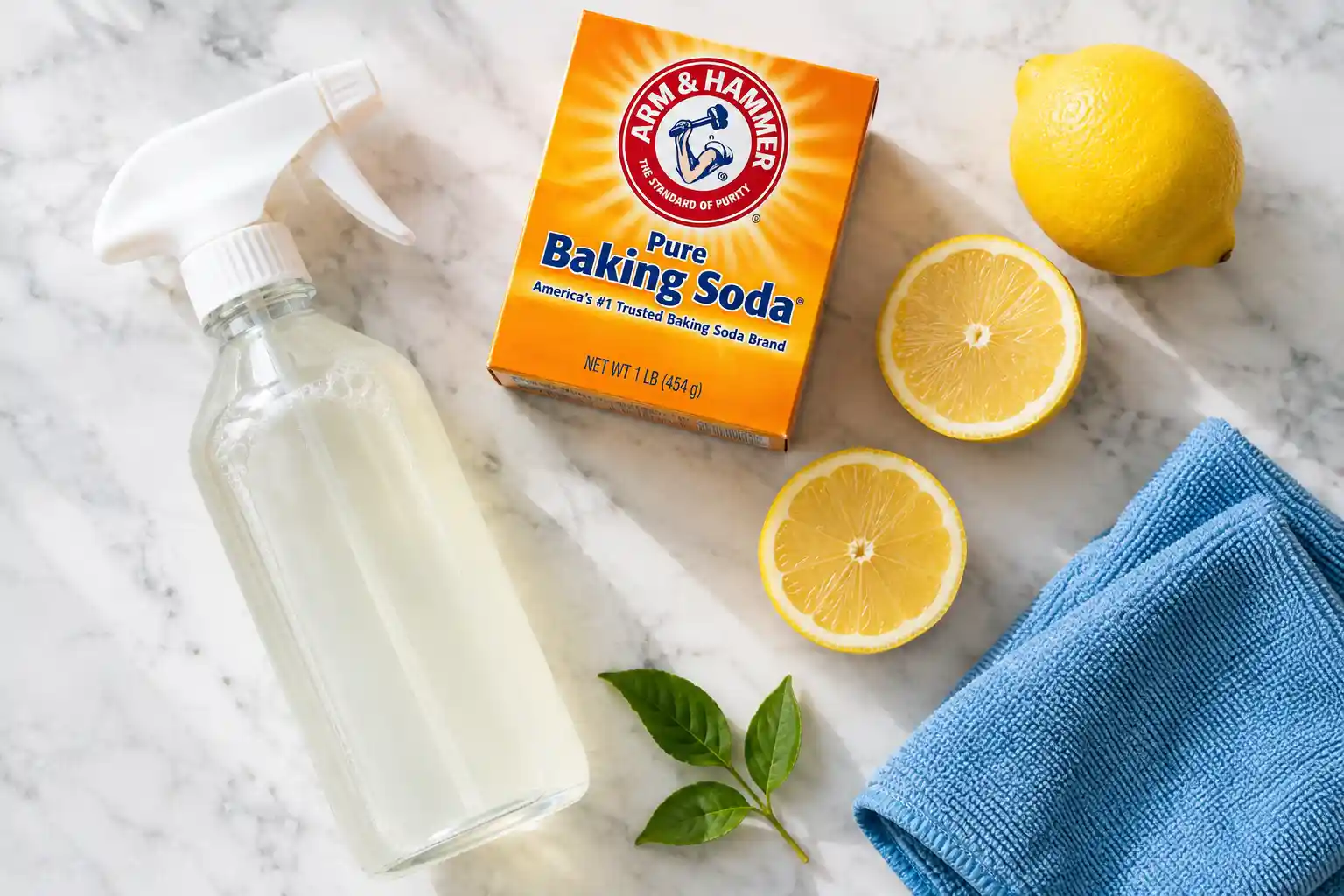
Every cleaning blog has a miracle mix. Vinegar plus this. Baking soda plus that. Some of it works. Some of it doesn’t. A few combos can actually hurt you. So let’s sort it out. This is a guide to natural cleaning swaps that hold up, plus the myths worth dropping first. I checked each claim against health and consumer sources and noted where it came from. The headline? These swaps clean well. They don’t disinfect well. Remember that one difference and you’ll waste less money, skip the risky stuff, and stop buying five bottles to do one job.
Three Myths to Drop First
Bad advice causes most cleaning trouble, not bad ingredients. Three beliefs come up again and again. They sound reasonable. They just don’t hold up.
Let’s knock them out.
Does vinegar kill germs?
Not reliably. It isn’t an official disinfectant. One health site notes that the EPA hasn’t registered vinegar as a disinfectant. There’s a catch with the research too. Lab tests often use 10 percent acidity, while store bottles run five to six percent. Your jug is weaker than the version in the study. healthlinetheskimm
Is “natural” the same as safe to mix?
No. Not even close. Combining the wrong products can produce dangerous toxic gases. Health Canada says it flatly: never mix any cleaning product with household bleach. Vinegar counts. So does ammonia. canada
Is cleaning the same as disinfecting?
Nope. Cleaning lifts dirt. Disinfecting kills germs. Order matters too, since no product can disinfect a dirty surface. Wipe first. Then decide if you need more. yahoo
Natural Cleaning Swaps That Hold Up
Now the good part. Seven swaps pass the test. Each one replaces a single store product, and each has a clear job.
I’ve sorted them by mess, not by ingredient. When something spills, you’ll know what to grab.
What works on windows and counters?
Start with vinegar and water. That’s swap one. NSF says it can clean and freshen many surfaces, including walls, cupboards, and windows. It replaces glass cleaner. Test a small patch first, though. nsf
Everything else? Plain soap and water. That’s swap two. Dull, sure. Also effective on most counters and floors.
What replaces scouring powder?
Baking soda. Swap three. It helps clean areas like bathtubs that you don’t want to scratch. Dampen a sponge, sprinkle, scrub gently, rinse. nsf
Light oven spill? That’s swap four. One source suggests a paste of half a cup of baking soda and three tablespoons of water. Burnt-on gunk will still beat it. Know its limits. earth911
How do I fight odors without a spray?
Skip the plug-in. Baking soda can absorb odors in refrigerators and closets. Swap five. Open a box, set it on a shelf, replace it about once a month. (That timing is my rule of thumb, not a tested number.) nsf
Smelly rug? Swap six. Cornstarch or baking soda will do it, since both help deodorize rugs and carpets. Sprinkle, wait around 15 minutes, vacuum. nsf
Do I really need paper towels?
Probably not. Swap seven is a microfiber cloth. Wash it, dry it, reuse it. No study behind this one. It’s just common sense, and your trash can will thank you.
Where Vinegar Backfires
Everyone loves vinegar. Fair. But it’s an acid, and acids eat things.
Read this section before you learn the hard way. A cloudy patch on marble doesn’t come back.
Which surfaces should never get vinegar?
Natural stone, waxed wood, aluminum, and cast iron. A news report lists aluminum, cast iron, waxed wood, and natural stone as damage risks. Granite and marble count as stone. Use mild soap on those. businessinsider
What should never be mixed?
Three rules. One: bleach and vinegar make chlorine gas. Two: bleach and ammonia make chloramine, another toxic gas. Third, never mix hydrogen peroxide with vinegar, as combining them can create a potentially harmful substance. 13abcpuroclean
Feel dizzy after mixing something? Get outside and into fresh air. In the US, Poison Control answers at 1-800-222-1222. 13abc
When a Swap Isn’t Enough
Some jobs need more. Raw chicken juice on the counter. A sick kid’s bathroom. A changing table.
For those, use a product tested against germs. Natural options can qualify. Just check the label.
How do I disinfect safely?
Clean first. Then use a registered product and respect its contact time. Hydrogen peroxide is one option. A disinfectant brand cites the CDC saying commercially available 3% hydrogen peroxide is a stable and effective disinfectant on hard surfaces. Spot-test first. Peroxide can lighten some materials. bungalow
What should I look for on the label?
For disinfectants, find the EPA number. One guide recommends checking the product label for its “EPA Reg.” registration number. For everyday cleaners, NSF suggests picking products without added fragrances. healthlinensf
Conclusion
Natural cleaning swaps work when you give them the right job. Vinegar, baking soda, soap, and cloths handle everyday dirt, glass, and odors. They don’t replace a real disinfectant. And they never mix with bleach. Keep vinegar off stone, and read labels when germs matter. Pick two swaps this week, say glass and tub, and keep whichever ones stick. Small changes last longer than a full cabinet purge. They also cost less than one more bottle of spray.
FAQs
Do natural cleaning products really work?
Yes, for everyday dirt, grease, and odors. Baking soda, vinegar, and soap handle most routine jobs. For killing germs, use an EPA-registered disinfectant.
Can I mix vinegar and baking soda to clean?
You can, but the fizz mostly cancels both out. It looks dramatic and cleans less well. Use baking soda as a paste, then wipe with a vinegar solution.
What should you never mix with bleach?
Never mix bleach with vinegar, ammonia, or any other cleaner. The mixes can make toxic gases. Use bleach alone, in a ventilated room.
Is vinegar safe on granite and marble?
No. The acid can etch natural stone and dull the finish. Use mild soap and water instead.
2 thoughts on “Natural Cleaning Swaps: 7 That Work and the Myths to Drop”